
News
How Does a Peptide Factory Ensure Product Quality?
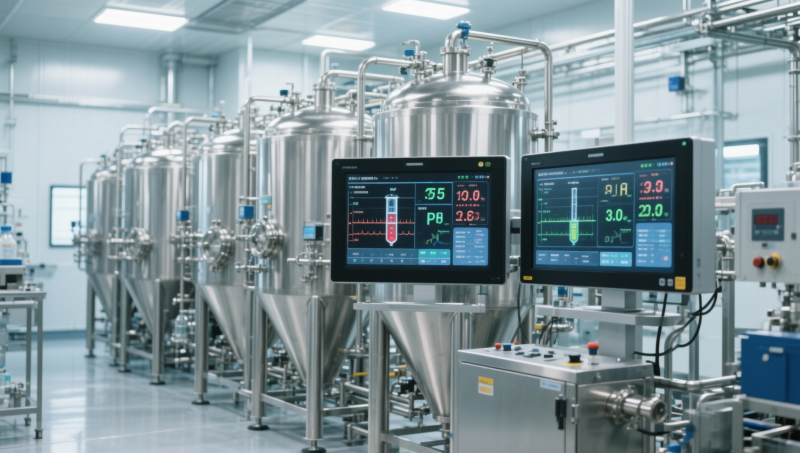
In the biotechnology and functional raw material industries, the quality of active peptides directly governs the safety and market performance of retail products. Whether utilized in high-end anti-aging skincare formulations or functional dietary supplements, the consistency of the raw materials is the cornerstone of brand reputation.
To achieve uncompromising safety and efficacy, premium peptide manufacturing plants implement comprehensive multi-dimensional quality management systems across their entire production lifecycles.
1. Source Control: Stringent Raw Material and Process Parameter Management
High-quality output begins with absolute control at the very entrance of the manufacturing line.
Incoming Material Auditing: Every incoming lot of amino acid derivatives, target proteases, and natural plant or animal protein sources must pass strict identity and safety verification tests before entering the cleanrooms.
Automated Production Control: Modern factories utilize computer-programmed automated manufacturing systems. Whether executing large-scale enzymatic hydrolysis or high-precision Solid-Phase Peptide Synthesis (SPPS), operational parameters—such as reaction temperatures, pH levels, agitation speeds, and chemical feeding windows—are digitally monitored. This layout minimizes human error and locks in batch-to-batch consistency.
2. Technological Capabilities: Advanced Purification and Analytical Testing
Chemical purity and precise structural formation are the ultimate metrics of peptide bio-activity.
Industrial-Scale Chromatographic Purification: Crude peptides coming off synthesis or extraction lines inherently contain synthesis by-products or incomplete chains. Factories leverage large-scale Preparative High-Performance Liquid Chromatography (HPLC) columns to isolate the target fractions, allowing commercial batches to stably achieve purities exceeding 95% or 98%.
Dual Analytical Verification: Before clearing quality assurance (QA) holding zones, every single batch undergoes Mass Spectrometry (MS) to confirm its molecular weight matches the intended chemical structural design. Analytical HPLC is then deployed to run detailed quantitative analysis. Only batches passing all specifications receive an official Certificate of Analysis (COA), which also validates heavy metal limits and microbial compliance.
3. Management Infrastructure: Global Certifications and Full Traceability
A standardized management system ensures long-term quality control and facilitates seamless global supply chain deployment.
Authoritative Industry Credentials: Premium manufacturers operate under internationally validated frameworks, retaining certifications such as GMPC or ISO 22716 for cosmetic ingredient processing, alongside ISO 22000 or HACCP protocols for nutritional and dietary food lines.
Full Lifecycle Traceability: From material intake and intermediate blending to freeze-drying and cleanroom packaging, every phase generates a Standardized Batch Record (SBR). This granular documentation ensures that every delivery can be traced back through its precise production timeline.
4. B2B Search Optimization (SEO) and Google Ads Copywriting Guardrails
When building technical B2B digital assets, landing pages, or configuring Google Ads search campaigns, marketing teams must enforce clear compliance protocols to prevent ad disapprovals or policy restrictions:
Emphasize Industrial Strengths: Build copy entirely around quantifiable physical metrics—such as certified ISO/GMP infrastructure, computerized synthesis reactors, precise purity statistics ($95%+$), and verified analytical instrumentation.
Eliminate Therapeutic Claims: Never use medical terminology that states or implies cosmetic or nutritional peptides can diagnose, treat, or cure clinical physical ailments or chronic skin conditions. The tone must remain strictly technical, B2B-focused, and restricted to raw material behavior, industrial scaling, and formulation stability.