
News
How to Choose a Reliable Peptide Factory?
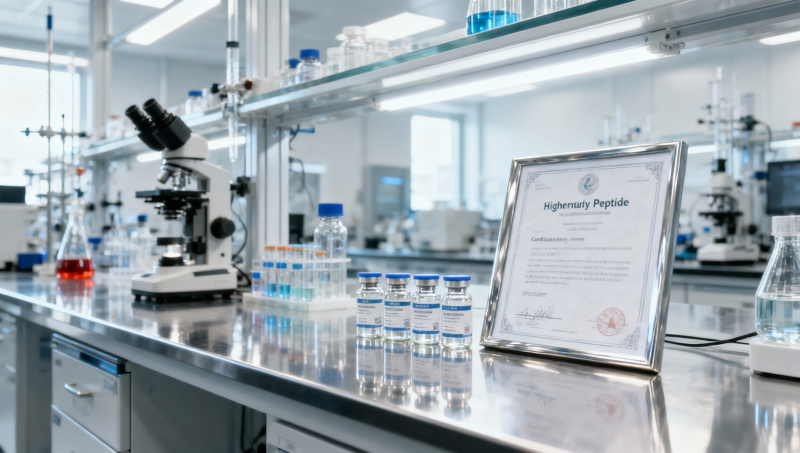
As the application of active peptides in cosmetics, health foods, and pharmaceuticals continues to accelerate, the global market demand for premium-grade peptide raw materials has entered a phase of explosive growth. For brand owners and procurement managers, partnering with a technologically advanced and regulatory-compliant peptide factory is the single most critical factor in securing the safety and efficacy of end products.
When evaluating various manufacturing bases, businesses should focus on several foundational pillars to identify a truly reliable production partner.
1. Evaluate Core Manufacturing Technology and Purity Control
A reputable peptide factory must demonstrate mastery over its industrial synthesis and refining workflows.
Technological Alignment: If you are sourcing dietary small-molecule oligopeptides (e.g., marine collagen peptides), prioritize factories with advanced enzymatic hydrolysis setups and molecular weight control technologies. For high-end cosmetic active ingredients (e.g., Copper Tripeptide-1), carefully evaluate their automated Solid-Phase Peptide Synthesis (SPPS) capabilities.
Analytical Quality Control (QC): Ensure the facility houses industrial-grade Preparative High-Performance Liquid Chromatography (HPLC) for isolation and Mass Spectrometry (MS) for molecular weight verification. A reliable supplier should consistently deliver cosmetic peptide purities exceeding 95% or 98%, backed by a comprehensive Certificate of Analysis (COA) for every production batch.
2. Verify Regulatory Certifications and Global Compliance
Official credentials and quality management systems are proof of a factory’s operational discipline and safety standards. They directly determine whether your finished product can be legally commercialized.
Industry Certifications: Confirm that the facility holds recognized qualifications such as GMPC or ISO 22716 for cosmetic-grade manufacturing, and ISO 22000 or HACCP for nutritional/food-grade production lines.
Global Market Access Support: For brands targeting international trade, the factory must provide full regulatory documentation. This includes ensuring ingredients align with local compliance registries (such as INCI directories or EU REACH regulations) and providing detailed Safety Data Sheets (SDS/MSDS).
3. Assess Scaling Capacity and Batch-to-Batch Consistency
Commercial formulations demand an uninterrupted, highly stable upstream supply chain.
Industrial Scalability: The ideal partner should support your business continuity—moving seamlessly from small lab-scale custom blending and pilot trials to high-volume commercial mass production.
Process Automation: Inquire whether the manufacturer utilizes computer-programmed, automated reactor systems. Automated workflows stabilize physical and chemical parameters, minimizing human-induced variations and ensuring that the color, solubility, and bio-activity remain identical from batch to batch.
4. B2B Copywriting and Google Ads Compliance Guidelines
When deploying technical B2B SEO landing pages or executing paid search marketing campaigns via Google Ads, copywriters must adhere strictly to international advertising frameworks:
Lead with Technical Assets: Focus on industrial strengths, such as automated equipment, chemical purity metrics ($95%+$), standardized testing rooms, and ISO/GMP credentials.
Eliminate Prohibited Medical Claims: Never state or imply that cosmetic or food-grade peptide raw materials can function as medicine, diagnose physical ailments, or heal clinical skin conditions. Keep the content professional, objective, and centered purely on raw material standards and formulation support.