
News
What Characterizes a High-Quality Peptide Factory?
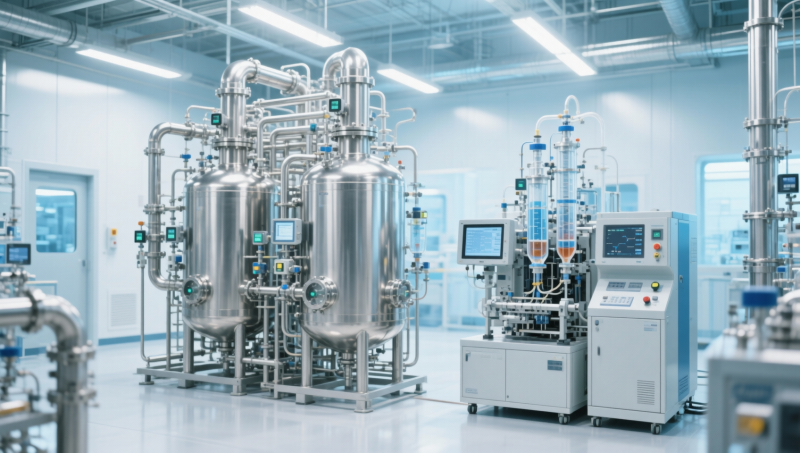
In the global B2B biotechnology and functional ingredient markets, bioactive peptides have emerged as premier ingredients across anti-aging cosmetics, nutritional supplements, and pharmaceuticals. However, the quality of upstream raw materials directly governs the safety and market performance of retail products. For brand innovators and procurement directors searching for reliable manufacturing partners, a high-quality peptide factory must possess several defining structural and technological characteristics.
1. Advanced R&D Infrastructure and Custom Customization
A premier peptide manufacturer does not merely execute manufacturing; it operates as a technical collaborative partner capable of solving complex formulation challenges:
Versatile Manufacturing Methodologies: The facility must demonstrate technical proficiency in both heavy-tonnage enzymatic hydrolysis (for food-grade dietary oligopeptides) and automated Solid-Phase Peptide Synthesis (SPPS) (for premium cosmetic active ingredients like Copper Tripeptide-1 or Acetyl Hexapeptide-8).
Structural Optimization Capabilities: High-quality factories feature chemical engineering teams capable of executing strategic modifications—such as acetylation, palmitoylation, or micro-encapsulation. These modifications enhance the physical stability, compatibility, and skin-penetration metrics of the peptides within finished creams or serums.
2. Elite Purification Systems and Absolute Quality Control (QC)
Chemical purity acts as the ultimate benchmark for active peptide bio-activity. Top-tier production plants establish strict control mechanisms to guarantee consistent delivery:
Preparative Chromatography Systems: The facility operates large-scale industrial Preparative High-Performance Liquid Chromatography (HPLC) columns to isolate target components, allowing commercial batches to stably achieve purities exceeding 95%, 98%, or 99%.
Rigorous Structural Verification: Before any inventory clears the warehouse, quality assurance teams utilize Mass Spectrometry (MS) to verify that the molecular weight perfectly corresponds with the intended chemical design. Analytical HPLC chromatography is then deployed to confirm exact purity parameters, culminating in a detailed Certificate of Analysis (COA) for every single lot.
3. Globally Recognized Certifications and Supply Chain Compliance
Authoritative regulatory credentials serve as evidence of operational transparency and rigorous sanitation, facilitating seamless market access for global brands:
Critical Industry Credentials: The manufacturing facility must hold validated certifications, including GMPC or ISO 22716 for cosmetic ingredient processing, and ISO 22000 or HACCP frameworks for dietary and nutritional ingredients.
International Regulatory Support: For companies managing cross-border supply chains, a premium factory provides flawless documentation. This includes providing localized Safety Data Sheets (SDS/MSDS), certificates of origin, and compliance validation for target market inventories (such as aligning with local INCI listings or EU REACH registrations).
4. Search Optimization (SEO) and Paid Search (Google Ads) Copywriting Guardrails
When building technical B2B digital assets, landing pages, or configuring Google Ads search campaigns, marketing teams must enforce clear compliance protocols to prevent ad disapprovals or policy restrictions:
Emphasize Industrial Strengths: Build copy entirely around quantifiable physical metrics—such as certified ISO/GMP infrastructure, computerized synthesis reactors, precise purity statistics ($95%+$), and verified analytical instrumentation.
Eliminate Therapeutic Claims: Never use medical terminology that states or implies cosmetic or nutritional peptides can diagnose, treat, or cure clinical physical ailments or chronic skin conditions. The tone must remain strictly technical, B2B-focused, and restricted to raw material behavior, industrial scaling, and formulation stability.