
News
Can a Peptide Factory Provide Custom Peptide Synthesis Services?
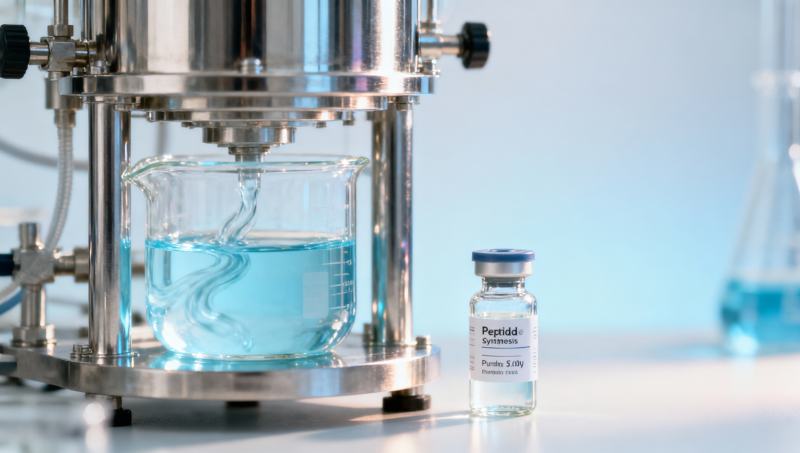
The short answer is yes. As innovation accelerates across the biopharmaceutical, functional skincare, and health food industries, standard "off-the-shelf" peptide raw materials are often insufficient to meet the highly differentiated formulation needs of brands. Today, one of the defining core competencies of a premier peptide factory is its ability to offer high-quality, flexible custom peptide synthesis services.
1. What Does Custom Peptide Synthesis Service Entail?
Leveraging automated Solid-Phase Peptide Synthesis (SPPS) and advanced liquid-phase technologies, a high-tier peptide manufacturer can tailor active ingredients to a brand's exact specifications:
Precise Structural Construction: Clients can define specific amino acid proportions, lengths, and spatial arrangements. The factory's chemical engineering teams then construct the exact molecular structure using computer-programmed reactors.
Strategic Chemical Modifications: To significantly enhance a peptide's stability, solubility, or skin-penetration metrics within retail cosmetics (like serums and creams), factories provide advanced modifications such as acetylation, palmitoylation, biotinylation, cyclization, or micro-encapsulation.
Targeted Purities and Scalable Volumes: Depending on the target industry (cosmetic-grade, food-grade, or pharmaceutical-grade), factories can customize purity thresholds to exceed 95%, 98%, or 99%. Crucially, they provide seamless scaling—moving smoothly from milligram-level lab trials and pilot testing to multi-kilogram or multi-ton commercial mass production.
2. Crucial Benchmarks for Evaluating a Custom Synthesis Partner
When auditing a factory for custom contract manufacturing, brands must look past pricing and evaluate technical quality assurance (QA) frameworks:
Analytical Verification: A reliable factory must accompany every custom batch with rigorous validation documentation. This includes Mass Spectrometry (MS) to verify that the molecular weight perfectly matches the target design, and analytical High-Performance Liquid Chromatography (HPLC) to confirm precise purity levels, summarized in a valid Certificate of Analysis (COA).
Standardized Infrastructure: Ensure the custom synthesis lines operate within standardized cleanrooms holding recognized credentials, such as GMPC, ISO 9001, or ISO 22716. This guarantees batch-to-batch consistency and protects your proprietary formulations from cross-contamination.
3. Copywriting and Digital Advertising Compliance (Google Ads & SEO)
When writing B2B web copy for organic search engine optimization (SEO) or setting up global search campaigns via Google Ads, digital marketers must operate within strict regulatory guardrails:
Lead with Engineering and Industrial Facts: Structure your headlines and descriptions around quantifiable physical metrics—such as automated synthesis capacity, modification technologies, cleanroom classes, and third-party laboratory certifications.
Strictly Avoid Therapeutic Language: Under strict international advertising policies, never claim or imply that a custom-synthesized peptide raw material can cure clinical skin disorders (such as eczema or severe acne), reverse physiological aging, or treat bodily diseases. Keep all messaging professional, factual, and strictly focused on raw ingredient parameters, manufacturing precision, and formulation compatibility.